How Foreigners Can Legally and Safely Buy Property in Thailand: The 2026 Guide
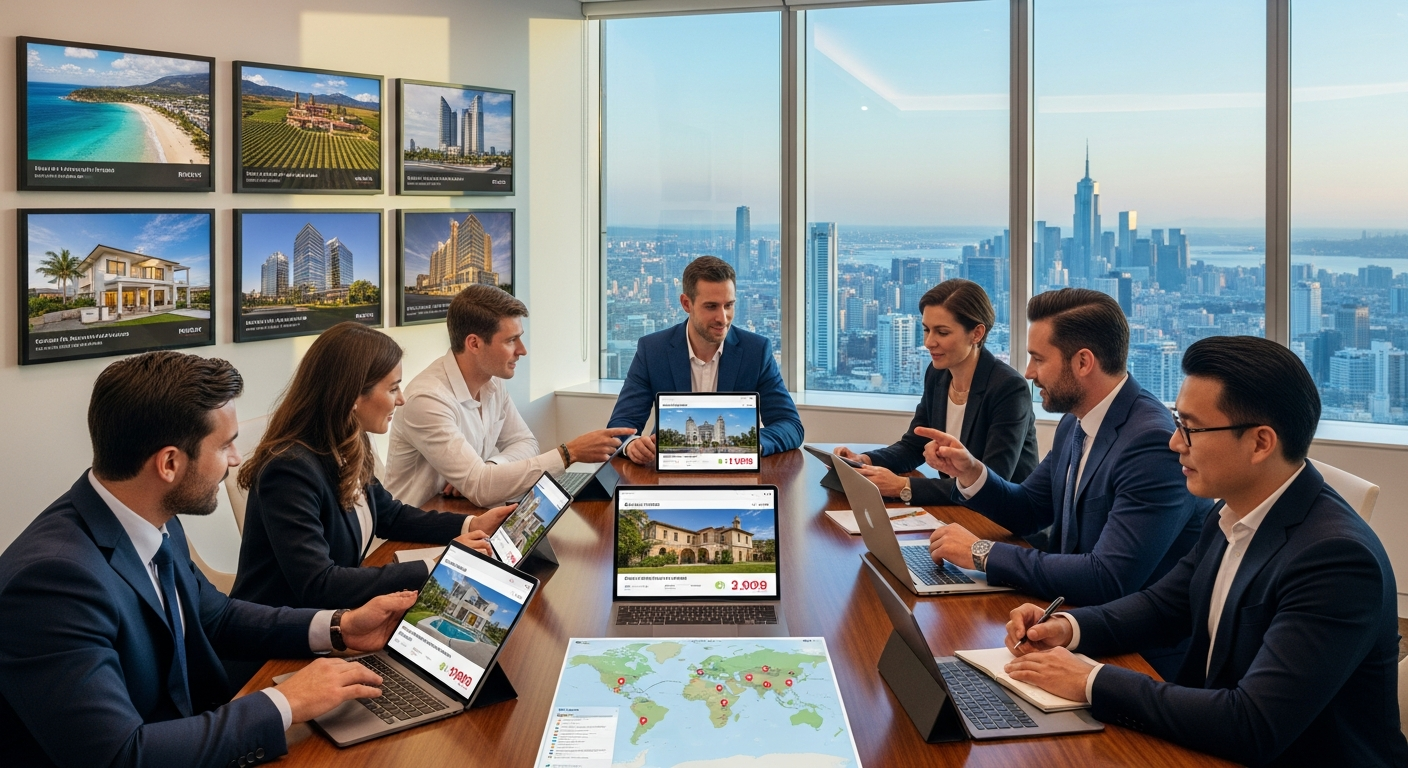
Navigating the legal landscape of Thai property ownership requires expert guidance and strict adherence to financial compliance.
Thailand remains one of the most desirable destinations for lifestyle investment in Southeast Asia. Whether you are seeking a retirement haven in Hua Hin, a holiday pool villa, or a high-yield investment condominium, the allure is undeniable. However, for High-Net-Worth Individuals (HNWIs) and international investors, the excitement of acquisition must be balanced with rigorous due diligence. The question we hear most often at REMAX The Grace Real Estate is not "Which property should I buy?" but rather, "Is my money safe, and do I actually own this asset?"
The internet is saturated with conflicting advice, outdated forum threads, and "barstool legal opinions" that suggest dangerous workarounds. This guide is designed to cut through the noise. It is a comprehensive, unfiltered look at the legal mechanisms available for foreign property ownership in 2026. We focus purely on secure structures, financial safeguards, and the critical compliance required by the Thai Land Department and Anti-Money Laundering Office (AMLO).
At REMAX The Grace Real Estate, we believe that peace of mind is the ultimate luxury. You cannot enjoy a tropical asset if you are concerned about the validity of your title deed. Below, we detail the three primary ownership structures, the risks associated with each, and the essential "FET Form" financial protocol that every foreign buyer must master.
1. What are the 3 Legal Ownership Structures for Foreign Buyers in Thailand?
There is no single "best" way to buy property in Thailand; the correct structure depends entirely on your residency status, your investment horizon, and the type of property you wish to acquire. Generally, foreign ownership falls into three distinct categories:
- Foreign Freehold Condominium: The most secure and straightforward method, allowing 100% ownership in your own name.
- Long-Term Leasehold (30 Years): The standard method for foreigners wishing to "own" a landed property or villa.
- Thai Limited Company: A complex route involving corporate structures to hold land, which requires strict compliance to avoid illegality.
Understanding the nuance of each is critical to protecting your capital. Let us examine them in detail.
2. Why is a Foreign Freehold Condominium the Most Secure Option?
For international investors seeking zero legal friction and absolute security, the Foreign Freehold Condominium is the gold standard. Under the Thai Condominium Act, foreigners are legally permitted to own 100% of a condominium unit in their personal name, provided that the total foreign ownership within that specific building does not exceed 49% of the total sellable floor area.
The "Chanote" Title Deed
When you purchase a foreign freehold unit, you receive a title deed known as a Chanote. Your name is printed in Thai on the back of this document as the legal owner. This grants you the same property rights as a Thai citizen:
- You can mortgage the property.
- You can sell the property to anyone (Thai or Foreigner).
- You can inherit the property to your heirs through a Last Will and Testament.
Warning on "Leasehold Condos": If a developer tells you the "Foreign Quota" (the 49%) is full, they may offer you a unit in the same building on a "Leasehold" basis. While the physical unit is identical, the legal asset is vastly different. You are buying a 30-year rental contract, not a perpetual asset. Always clarify with REMAX The Grace Real Estate if a unit is Foreign Quota or Leasehold before paying a deposit.
3. How Does a 30-Year Villa Leasehold Actually Work (and What are the Risks)?
Under the Thai Civil and Commercial Code, foreigners generally cannot own land. This is a strict sovereign restriction. However, you can own the building (the structure itself) and lease the land it sits on. This is the most common method for foreigners buying luxury pool villas in areas like Hua Hin, Phuket, or Samui.
The 30-Year Cap: Thai law currently recognizes a maximum lease term of 30 years. This lease is registered at the Land Department, providing state-backed security for that period.
The Myth of "30+30+30" (90 Years)
Many developers advertise "90-year leases" via a "30+30+30" structure. It is crucial to understand the legal reality:
- Guaranteed: Only the first 30-year term is guaranteed by the government upon registration.
- Contractual Promise: The subsequent two renewals (the +30+30) are contractual promises between you and the lessor (landowner). They are considered "personal rights," not "real property rights."
- Risk: If the land is sold to a third party, or if the landowner passes away, the obligation to renew the lease might not automatically transfer to the new owner unless specifically drafted with "succession clauses" that are legally binding.
The Safeguard - Owning the Building: To mitigate this risk, REMAX The Grace Real Estate advises that you register the ownership of the house structure in your name. This is done via the local district office, not the Land Department, and results in a Tabien Baan (House Registration Book). Owning the bricks and mortar gives you significant leverage; the landowner cannot easily evict you because you own the house sitting on their land.
4. Is Using a Thai Limited Company to Own Land Still Viable in 2026?
Historically, many foreigners formed Thai Limited Companies to purchase land. The structure typically involves the foreigner holding 49% of the shares (the legal maximum) and Thai nationals holding 51%. By assigning the foreign director (you) with sole signing authority and using "preference shares" to control voting rights, the foreigner effectively controls the asset.
However, in 2026, the scrutiny on this method has intensified. The Thai government and the Land Department actively look for "Nominee" structures.
The Risk of Nominees
A "Nominee" is defined as a Thai shareholder who has no genuine interest in the company, did not invest their own capital, and is being paid purely to hold shares on behalf of a foreigner to circumvent the Foreign Business Act. This is illegal. If an investigation reveals a nominee structure:
- The company can be dissolved.
- The Land Department can force the immediate sale of the land.
- Directors and shareholders can face fines and legal action.
When is it Viable? This route is still viable for legitimate investors who run active businesses in Thailand, pay taxes, file annual audits, and have genuine Thai business partners. It should never be used solely for a residential holiday home without active business operations.
5. What is the Foreign Exchange Transaction (FET) Form and Why is it Critical?
Perhaps the most critical financial document in the entire buying process is the Foreign Exchange Transaction (FET) Form (previously known as Thor Tor 3). Failing to obtain this document will prevent you from registering the property in your name.
To register a Foreign Freehold Condominium, the Land Department requires proof that 100% of the purchase price originated from outside Thailand in a foreign currency.
The Correct Transfer Procedure
- Send Foreign Currency: Do NOT convert your funds (USD, EUR, GBP) into Thai Baht before sending. Transfer the funds in your home currency.
- Conversion in Thailand: The receiving Thai bank must convert the currency into THB locally. This triggers the banking record required for the FET.
- Instruction Code: In the transfer instructions, you must explicitly state: "For the purchase of Condominium Unit [Number] at [Project Name] for [Buyer Name]."
- Obtaining the Form: For amounts over $50,000 USD, the bank issues the FET form. For lesser amounts, a Credit Note acts as the substitute.
Repatriation of Funds: The FET form is not just for buying; it is your exit strategy. If you sell the property in the future and wish to transfer the proceeds back to your home country, the Bank of Thailand requires the original FET form as proof that the capital was brought in legally. Without it, your money is effectively locked in Thailand.
6. What Essential Due Diligence Must Be Completed Before Any Payment?
Thailand is a "Caveat Emptor" (Buyer Beware) market. Unlike some western jurisdictions where title insurance is standard, here, due diligence is your only insurance. Before signing a reservation agreement or paying a booking fee, REMAX The Grace Real Estate coordinates with independent legal partners to perform three non-negotiable checks:
- Title Search (Chanote Verification): We verify the back of the title deed at the Land Department to ensure the seller is the current legal owner and to check for "Encumbrances" (mortgages, liens, or preferential rights held by banks or third parties).
- Access Rights (Servitude): We confirm that the road connecting the property to the main public highway is legally registered. Buying a "landlocked" plot with no legal right of entry is a common disaster for unrepresented buyers.
- Building Permits: We verify that the villa or condo was constructed in accordance with the issued building permit. Illegal extensions or pools built too close to boundary walls can be subject to demolition orders.
Frequently Asked Questions
Q: Can a foreigner get a mortgage in Thailand?
Generally, it is very difficult for non-resident foreigners to get a mortgage from a Thai bank. Most property purchases by foreigners are cash transactions, requiring proof of funds from overseas via the FET form. Some international banks (like UOB) may offer financing options for specific properties to foreigners working in Thailand with a work permit, but terms are strict.
Q: What happens to my leasehold property after 30 years?
The lease expires. While renewal clauses for subsequent 30-year terms are common in contracts, they are contractual promises, not a guaranteed legal right enforced by Thai property law. Their strength depends entirely on the initial contract drafting and the willingness of the landowner at that time.
Q: What is the risk of using nominee Thai shareholders for a company?
Using nominee shareholders is illegal under the Foreign Business Act. If discovered by the Land Department or Business Development Department, the company can be forced to sell the land, and directors may face legal penalties, including fines and imprisonment.
Q: Can I lose my deposit if I cannot produce a FET form?
Yes. The inability to produce a valid FET form will halt the land transfer at the Land Department. This is considered a failure on the buyer's part to complete the transaction, which typically results in the forfeiture of any deposit paid to the seller.
Q: What is the difference between a Chanote and a Tabien Baan (House Book)?
A Chanote is the title deed; it proves ownership of the land (or condo unit) and is the most important document. A Tabien Baan is a house registration book; it registers the inhabitants of the property for census purposes. While the Tabien Baan is important for utilities and visa applications, it does not prove legal ownership of the property.
Schedule Your Confidential Consultation
Secure your Thai property investment in 2026. Whether you are looking for a Foreign Freehold Condo or navigating a Leasehold Villa acquisition, ensure your purchase is legally sound. Consult with REMAX The Grace Real Estate today.
Contact Us